The Hidden Cost of Test-Prep Culture: Why Some Schools in Victoria, BC Are Choosing a Different Path

The Hidden Cost of Test-Prep Culture: Why Some Schools in Victoria, BC Are Choosing a Different Path

The Hidden Cost of Test-Prep Culture: Why Some Schools in Victoria, BC Are Choosing a Different Path

For parents exploring private schools in Victoria, BC, it’s worth asking an important question:

Is education about preparing for the next test — or preparing for life?

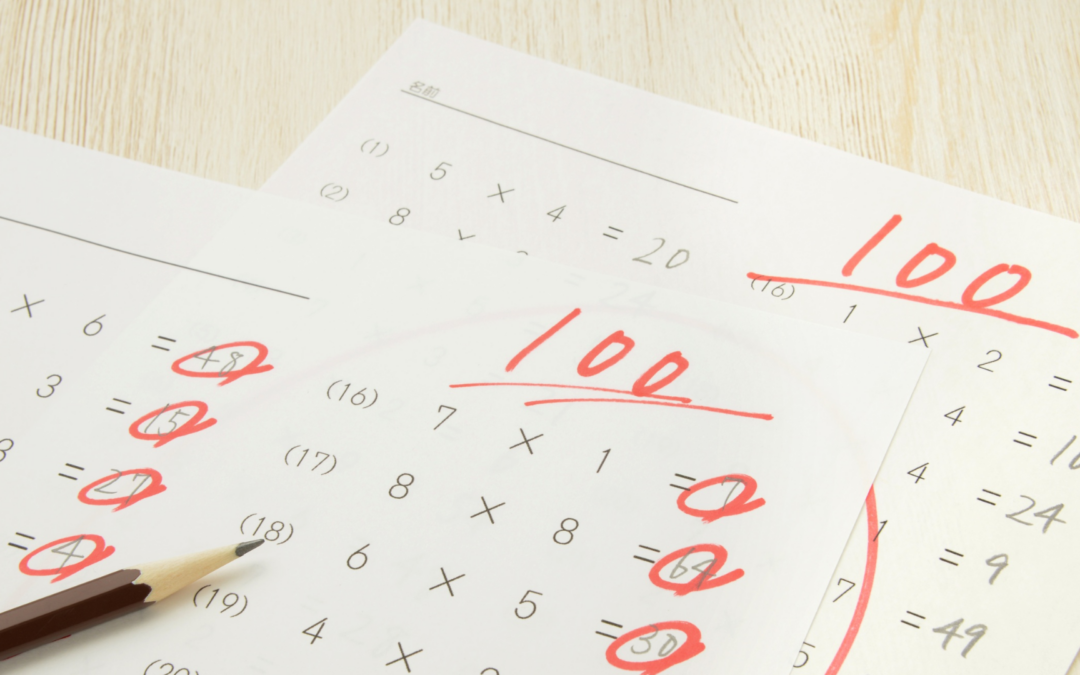
In today’s education system, standardized testing plays a significant role in how student success is measured. Across Canada and North America, many schools structure curriculum and pacing around preparing students for exams. While assessment is an important part of learning, a strong focus on test preparation can quietly shape the classroom experience in ways families may not immediately see.

At Westmont Montessori School in Victoria, BC, we take a different approach. As a Montessori school serving students from Early Years through High School, our focus is on deep understanding, independence, and meaningful engagement — not teaching to the test.

The Hidden Impact of a Test-Prep Focused Education

When curriculum is built around standardized assessments, classroom time often shifts toward practicing test formats, reviewing anticipated content, and targeting measurable outcomes. While this may improve familiarity with exam structures, it can reduce time for:

  • Inquiry-based exploration
  • Interdisciplinary projects
  • Creative problem-solving
  • Student-led discovery

Over time, this can lead to surface-level learning. Students may master how to answer specific types of questions without fully understanding the underlying concepts. Education can become performance-driven rather than curiosity-driven.

Additionally, when academic success is communicated primarily through scores, students may begin to associate learning with external validation. This can impact intrinsic motivation — the natural desire to explore, understand, and grow.

Families searching for alternatives to standardized testing in Victoria often seek an approach that prioritizes deeper learning and whole-child development.

A Montessori Education in Victoria, BC: Learning Beyond the Test

Montessori education offers a thoughtful alternative to a test-prep model. Rooted in respect for the child and supported by carefully prepared environments, Montessori classrooms are designed to foster independence, concentration, and purposeful work.

At Westmont Montessori School in Victoria:

  • Students engage in hands-on, experiential learning.
  • Lessons move from concrete understanding to abstract thinking.
  • Children work at a pace aligned with their development.
  • Multi-age classrooms encourage mentorship and collaboration.

Rather than focusing primarily on exam preparation, Montessori education encourages students to think critically, ask questions, and make connections across subject areas. These skills support long-term academic success and personal growth.

For families looking for a Montessori school in Victoria, BC, this approach provides a meaningful alternative to traditional education models centered around standardized testing.

How Assessment Works in a Montessori Environment

Choosing not to teach to the test does not mean eliminating assessment. Instead, it reframes its purpose.

In a Montessori classroom, assessment is ongoing and individualized. Teachers observe students closely, track academic progress, and provide personalized guidance. This allows educators to respond to each learner’s strengths and areas for growth.

Rather than relying solely on standardized benchmarks, progress is understood as a continuous journey. Students are encouraged to reflect on their learning, set goals, and take ownership of their development — skills that extend well beyond the classroom.

Preparing Students for Long-Term Success

The world students are entering values adaptability, collaboration, creativity, and critical thinking. An educational environment that nurtures these competencies helps prepare young people for post-secondary pathways, careers, and community involvement.

At Westmont Montessori School in Victoria, British Columbia, our goal is not simply to prepare students for the next assessment. Our aim is to cultivate capable, confident learners who approach challenges with curiosity and resilience.

For families considering private education in Victoria, BC, exploring a Montessori approach can open the door to a learning experience that emphasizes growth, independence, and meaningful engagement.

To learn more about our programs, we invite you to connect with Westmont Montessori School and discover how education can extend beyond test preparation.

Ready to Learn More?

From Montessori to University: How Alternative Education Prepares Students for Academic Success

From Montessori to University: How Alternative Education Prepares Students for Academic Success

From Montessori to University: How Alternative Education Prepares Students for Academic Success

Do Montessori students thrive in traditional universities?

Research reveals how alternative education creates superior post-secondary preparation.

“But will they be ready for university?”

This question keeps parents awake at night. They watch their children thrive in our progressive environment, choosing their own projects, working at their own pace, learning through hands-on exploration rather than textbooks and tests. And they wonder: when these students eventually face traditional lectures, standardized exams, rigid schedules, and conventional expectations, will they flounder?

The concern makes sense. Alternative education looks radically different from the university structures students will eventually navigate. Our High School students spend weeks designing sustainable agriculture programs with local farm partners, not memorizing facts for multiple-choice tests. They present at Mont-Talk events, not sitting passively in lecture halls. They pursue year-long capstone projects driven by their own interests, not following predetermined curricula.

Surely this freedom, this autonomy, this self-directed approach must leave gaps. Surely students need practice with traditional methods to succeed in traditional settings.

Here’s what research actually reveals: the skills developed through progressive, project-based, alternative education don’t just prepare students for university success — they create advantages traditional education struggles to provide.

Debunking the myth: do Montessori students struggle in traditional settings?

The question itself reveals assumptions worth examining. It presumes traditional educational approaches represent the gold standard, that university success requires specific preparation in conventional methods, that students who learn differently will face inevitable struggles when encountering mainstream expectations.

But what if we’ve been asking the wrong question? What if, instead of “will alternative education students adapt to universities,” we should ask “do universities need students with the exact skills alternative education develops”?

A comprehensive systematic review examining Montessori education’s effectiveness analyzed 32 rigorously selected studies from over 2,000 articles published through 2020. The research team, led by Justus Randolph of Georgia Baptist College of Nursing and including renowned Montessori researcher Angeline Lillard from the University of Virginia, found that Montessori education had significant positive impacts on both academic and nonacademic outcomes compared to traditional education.

The effects were particularly strong in general academics (composited across math, language, science, and social studies), with robust showings in both language and mathematics. Students demonstrated better executive function, the cognitive skills underlying planning, focus, and adaptability. They showed stronger engagement with learning and more positive school experiences.

Perhaps most tellingly, a study using admission lotteries in Dutch Montessori secondary schools found that Montessori students obtained their secondary school degrees without delay at the same rate and with similar grades as non-Montessori students. The route toward exams differed somewhat, but outcomes remained equivalent. These lottery-based studies are particularly valuable because they eliminate selection bias, randomly determining which students attend Montessori schools and thereby creating valid treatment and control groups.

Students educated in alternative approaches don’t struggle when they encounter traditional settings. They adapt, bringing skills traditional students often lack: self-direction, intrinsic motivation, comfort with independent work, ability to pursue questions deeply, and confidence in their own capacity to learn.

What universities actually look for (hint: it’s not just test scores)

University admissions officers will tell you they’re seeking well-rounded students with strong academics, extracurricular involvement, leadership experience, and community engagement. They want good test scores and impressive transcripts. But dig deeper into what makes students successful once they arrive on campus, and a different picture emerges.

Universities face a persistent problem: students arrive academically prepared but developmentally unprepared. They can pass placement tests but struggle to manage their own time. They earned strong grades in structured environments but flounder when given independence. They memorized information for exams but lack curiosity about their fields. They followed instructions well but struggle to formulate original questions.

Faculty members across disciplines describe similar challenges. Students wait to be told what to do rather than taking initiative. They focus on grades rather than understanding. They complete assignments mechanically without engaging deeply with ideas. They collaborate poorly, having spent years competing individually. They lack resilience, giving up when work becomes difficult because they’re accustomed to immediate success.

These aren’t academic problems. They’re problems of self-regulation, motivation, persistence, and genuine intellectual engagement — precisely the areas where alternative education excels.

What do universities actually need? Students who can direct their own learning when professors aren’t micromanaging. Students who pursue questions because they’re genuinely curious, not because there’s a test coming. Students who can work on complex projects over extended time periods without constant checkpoints and supervision. Students who see setbacks as learning opportunities rather than failures. Students who collaborate effectively because they’ve had years of practice working with others toward shared goals.

Research on adult wellbeing offers telling evidence. A study of 1,905 adults ages 18 to 81 found that attending Montessori for at least two childhood years was associated with significantly higher adult wellbeing across four factors: general wellbeing, engagement, social trust, and self-confidence. The difference in wellbeing between Montessori and conventional schools existed even among those who had exclusively attended private schools, suggesting the educational approach itself matters.

These qualities — engagement, social trust, self-confidence — predict not just university success but life satisfaction, career achievement, and health outcomes. Universities may admit based on test scores, but they graduate and celebrate students who demonstrate these deeper capacities.

The research on alternative education and post-secondary outcomes

Beyond individual skills, what do we know about actual post-secondary outcomes for students educated in alternative approaches? The research base has grown substantially as Montessori and other progressive education models have become more widespread and as researchers have developed better methods for evaluating educational approaches.

A 2023 meta-analysis representing years of exhaustive review found that Montessori education’s positive effects were particularly strong for elementary school-aged students, with effects maintaining through secondary education. The research examined both academic outcomes like mathematics, language, and general academic ability, and nonacademic outcomes including executive function, creativity, and school experience.

Importantly, the research found that quality of implementation matters. Programs that adhered more closely to authentic Montessori principles showed stronger effects. This isn’t surprising. Any educational approach, implemented poorly or half-heartedly, produces mediocre results. The question isn’t whether a school calls itself Montessori or progressive, but whether it authentically embodies the principles that make these approaches effective.

Research specifically examining Montessori students in higher education contexts has begun exploring how principles effective with younger students might translate to college settings. One study examined implementing Montessori approaches in an undergraduate marketing analytics course at a business school. While students initially struggled with the self-direction required because it differed so dramatically from their other courses, the experiential learning elements and direct industry connections showed promise for fostering deeper engagement and intrinsic motivation.

The challenge wasn’t that Montessori principles don’t work in higher education. The challenge was that students educated traditionally for years had difficulty adjusting when finally given autonomy and choice. This suggests that students who’ve experienced progressive education throughout their development arrive at university already possessing skills their peers must develop from scratch.

Studies examining public Montessori schools’ standardized test performance found that by third grade, students showed higher proficiency in English language arts, with mathematics proficiency catching up as students progressed. This pattern makes sense given Montessori’s emphasis on language development and its approach to mathematics through concrete materials before abstract symbols.

Skills that set alternative education graduates apart

When you observe our High School students working on their projects, you’re watching development of capacities that will serve them for decades. A student designing a sustainable agriculture program and analyzing crop yields isn’t just learning about farming. They’re developing project management skills, learning to set long-term goals and work toward them persistently, practicing hypothesis formation and testing, and building comfort with ambiguity and complexity.

When students present their work at Mont-Talk events to peers and parents, they’re not just checking a requirement. They’re learning to communicate complex ideas clearly, field questions and think on their feet, defend their choices and conclusions, and accept feedback without defensiveness. These aren’t school skills. These are life skills.

The most significant advantage alternative education graduates bring to university isn’t any particular content knowledge. It’s self-directed learning capability. They’ve spent years choosing their own paths within appropriately structured environments. They know how to identify what interests them, determine what they need to learn, find resources independently, persist through challenges without constant external motivation, and evaluate their own progress.

Traditional students often experience their first taste of real autonomy in university. Alternative education graduates have been practicing autonomy in increasingly sophisticated ways since early childhood. By the time they reach university, self-direction feels natural rather than overwhelming.

Critical thinking represents another distinct advantage. Our students tackle real problems with multiple possible approaches and no single correct answer. They learn to evaluate evidence, consider different perspectives, identify assumptions, question conclusions, and develop their own reasoned positions. These habits of mind don’t develop through multiple-choice tests and memorization. They develop through sustained engagement with complex, open-ended challenges.

Collaboration skills matter enormously in university and beyond. In our multi-age classrooms and project-based work, students learn to work with diverse others toward shared goals, contribute their strengths while acknowledging areas where they need help, negotiate disagreements constructively, and take collective responsibility for outcomes. Many traditional students reach university having spent years competing individually for grades and class rank. Alternative education students arrive with extensive collaborative experience.

Perhaps most importantly, progressive education graduates maintain intrinsic motivation for learning. They haven’t spent years being externally controlled through grades, rewards, and punishments. They’ve experienced education as inherently meaningful and satisfying. When they encounter challenging university courses, they persist because they care about learning, not just about grades.

How project-based learning creates better college students

In our High School program, students spend eight weeks creating alternative energy systems on campus or at partner sites. They work with organizations to construct actual alternative energy stations, set up systems to evaluate and monitor energy production, analyze data, and create final reports with findings and conclusions.

This isn’t simulation. It’s real work with real consequences. If their system doesn’t function, they troubleshoot until it does. If their analysis contains errors, they find and correct them. If their conclusions don’t follow from their data, they revise their thinking.

Compare this to traditional high school science. Students might read about alternative energy, perhaps watch videos, maybe conduct a controlled lab experiment following predetermined procedures, then answer questions on a test. The knowledge remains abstract, disconnected from application, quickly forgotten after the exam.

Project-based learning creates deep, transferable understanding because students wrestle with authentic complexity. They encounter problems textbooks don’t address. They make decisions with imperfect information. They experience how different subjects integrate in real contexts. They discover that effective solutions require iteration and refinement.

These experiences prepare them exquisitely for university-level work. Research papers require sustained effort over weeks or months, independent decision-making about approach and methodology, integration of multiple sources and perspectives, and revision based on feedback. Laboratory work involves troubleshooting unexpected results, adapting procedures when equipment malfunctions, and making judgments about data quality and interpretation.

Traditional students often find these demands overwhelming because they’ve rarely faced them before. Alternative education graduates recognize familiar territory. They’ve been managing complex projects, making independent decisions, working through ambiguity, and taking responsibility for outcomes for years.

The habits project-based learning develops matter as much as the specific skills. Students learn to break large tasks into manageable components, create realistic timelines and adjust when necessary, seek help strategically rather than giving up, and maintain focus over extended periods without constant external structure.

University professors consistently report that their best students aren’t necessarily those with the highest test scores. Their best students are self-motivated, intellectually curious, willing to struggle with difficult material, capable of working independently, and genuinely engaged with their field. These are precisely the students alternative education produces.

Real outcomes: where our graduates go and what they achieve

While respecting the privacy of individual students and families, we can speak generally about patterns we observe in our graduates’ post-secondary paths. Our students pursue diverse directions reflecting their varied interests and goals developed through years of self-directed learning.

Some attend traditional four-year universities, where they study fields ranging from environmental science to engineering, from arts to business. Others choose specialized programs aligned with skills developed through their High School projects and community partnerships. Some pursue technical training in trades or certification programs. Others take gap years for travel, work experience, or entrepreneurship before entering formal post-secondary education.

What unites these diverse paths is confidence and clarity. Our graduates generally know why they’re pursuing their chosen direction. They haven’t selected paths because that’s what’s expected or because they’re following a prescribed track. They’ve explored their interests authentically, developed genuine passions, and made informed choices about their futures.

When our graduates do attend traditional universities, feedback consistently highlights several patterns. Professors comment on their initiative and intellectual curiosity. They don’t wait to be told what to do. They ask substantive questions. They pursue topics beyond course requirements because they’re genuinely interested.

Their project management skills impress instructors. They handle complex assignments systematically, breaking them into components, managing timelines effectively, and producing work that demonstrates sustained effort and deep thinking rather than last-minute compilation.

They collaborate effectively in group projects, a notorious challenge in university courses. Having worked collaboratively for years rather than competing individually, they know how to contribute their strengths, accommodate different working styles, and achieve collective goals.

Most significantly, they maintain engagement even when courses become challenging. Traditional students often experience crisis when they encounter difficulty, having succeeded previously through natural ability or strong study skills. Alternative education graduates expect learning to involve struggle. They see challenges as opportunities for growth rather than threats to their identity as “good students.”

Why independent learners thrive in university environments

University represents a dramatic transition for many students. The structure that supported them throughout K-12 education suddenly disappears. Professors don’t take attendance or track completion of homework. No one ensures students manage their time effectively or seek help when struggling. Success depends on self-regulation, intrinsic motivation, and independent judgment.

For traditionally educated students, this transition can be devastating. They’ve spent years in systems that provided extensive external support and motivation. When that scaffolding vanishes, many flounder. They skip classes because no one’s monitoring. They procrastinate on assignments because there’s no weekly accountability. They struggle alone rather than seeking help because they haven’t learned to identify their needs and advocate for support.

Alternative education graduates navigate this transition more smoothly because they’ve already developed the capacities universities require. They’re accustomed to high autonomy within appropriately structured environments. They’ve practiced self-regulation in increasingly complex contexts throughout their education. They’ve experienced natural consequences of their choices without excessive intervention.

They know how to use freedom productively. When professors give open-ended assignments, they see opportunity rather than ambiguity. When faced with unstructured time, they organize it effectively. When they encounter difficulty, they seek resources independently. These aren’t skills they’re learning for the first time in university. They’re skills they’ve honed for years.

Their relationship with authority also serves them well. They respect expertise without being dependent on it. They can learn from professors who teach differently from their preferences. They can disagree respectfully with ideas while maintaining relationships. They seek guidance when needed but don’t require constant direction and approval.

Perhaps most fundamentally, they maintain curiosity. Traditional education often extinguishes natural curiosity through its focus on compliance, grades, and correct answers. By university, many students see education as a series of requirements to complete rather than opportunities to explore fascinating questions. Alternative education graduates arrive with curiosity intact, eager to engage deeply with subjects that interest them.

Research on Montessori education in higher education contexts suggests these principles remain relevant even at undergraduate and graduate levels. Studies exploring Montessori-inspired approaches in college courses found that when students could exercise greater autonomy and pursue intrinsic interests, they demonstrated deeper engagement and more sophisticated thinking.

The implication is clear: the problem isn’t whether alternative education students can succeed in traditional settings. The question is whether traditional settings can engage students as effectively as alternative approaches.

Years from now, your child will face challenges we can’t predict. They’ll need to learn things that don’t exist yet. They’ll collaborate with people across cultures and contexts. They’ll navigate complexity and ambiguity. They’ll need to think critically, adapt quickly, and keep learning throughout their lives.

The preparation they need isn’t mastery of any particular content. It’s development of capacities that enable lifelong learning, adaptation, and growth. It’s confidence in their ability to figure things out. It’s comfort with challenge and uncertainty. It’s genuine curiosity about the world. It’s ability to work with others toward shared goals. It’s persistence in pursuing what matters to them.

Our High School program intentionally develops these capacities through real projects with real consequences, through autonomy within appropriate structure, through collaborative work that matters, and through consistent support for students to pursue their own interests and questions deeply.

When our graduates reach university, they don’t arrive needing remediation or struggling to adapt. They arrive ready to fully engage with the opportunities higher education offers. They succeed not despite their alternative education but because of it.

The real question isn’t whether Montessori and project-based learning prepare students for universities as they currently exist. The question is whether universities can meet the needs of students who arrive as genuine learners rather than compliant performers.

Ready to Learn More?

The Long-Term Impact of Early Learning Programs

The Long-Term Impact of Early Learning Programs

The Long-Term Impact of Early Learning Programs

Early Learning Matters: Brain Development Ages 3-6

Discover what neuroscience reveals about ages 3-6 and why quality early learning programs create lifetime advantages.

Your three-year-old spends twenty minutes arranging wooden blocks by size. Again. She pours water from pitcher to cup, measuring carefully, spilling slightly, trying again. He traces sandpaper letters with careful fingers, forming the shapes that will become words. She sorts objects by color, then by texture, then by weight, absorbed in discoveries that look like simple play.

These moments aren’t preparation for learning. They are learning, happening at the most critical time in human development.

Between ages 3 and 6, children’s brains create neural connections at a rate they’ll never match again — at least 1 million new synaptic connections every second. The architecture being built during these years forms the foundation for everything that follows. Every other ability, every future skill, every capacity for learning, emotional regulation, social connection, and complex thinking rests on what happens right now.

Yet we often treat these years casually. We call it “just preschool.” We focus on whether children are ready for kindergarten rather than asking whether we’re providing experiences worthy of the most dynamic period of brain development humans ever experience. We debate whether three-year-olds need “real” education, as though the neural scaffolding being constructed at this very moment isn’t the most real education possible.

What science tells us about ages 3-6 and brain development

The numbers alone are staggering. A newborn’s brain is about 25% of adult size. By age three, it reaches 80%. By five, 90%. But size tells only part of the story. What matters more is connectivity, the intricate networks being wired during early childhood.

Neural connections form through experience. When a child explores their environment, encounters new materials, solves problems, interacts with others, and makes sense of the world, their brain responds by strengthening certain pathways and pruning others. This process, called synaptic pruning, creates efficient neural networks optimized for the experiences the child encounters. The brain essentially adapts its architecture based on the environment provided.

Research from neuroscience reveals that development follows a hierarchical pattern. Basic sensory and perceptual systems develop first, providing the foundation for more complex abilities. Language development depends critically on earlier sensory and perceptual development, the ability to discriminate speech sounds. Executive function builds on emotional regulation. Abstract thinking requires concrete experience as its base.

This means early experiences don’t just matter in isolation. They create the platform for all subsequent development. Disruption or deprivation during sensitive periods in early childhood can have lasting effects because later abilities depend on earlier foundations. The Bucharest Early Intervention Project, studying children raised in institutions versus foster care, found that early institutionalization led to significant long-term consequences in both brain development and behavior, demonstrating how profoundly early environment shapes developmental trajectories.

The preschool years represent a time of expansive psychological growth, with initial expression of many abilities that continue refining into young adulthood. Brain development during this age shows some of its most dynamic and elaborative anatomical and physiological changes. Structures underlying language, social behavior, and emotion are formed in these early years and are strongly influenced by experiences during this time.

By age five, the basic structure of the brain is largely established. Brain plasticity, the ability to rewire in response to environmental changes, begins declining. This doesn’t mean learning stops. The brain continues developing well into early adulthood. But the ease with which new neural pathways form and the foundational architecture being established makes the early years uniquely important.

Early learning vs daycare: understanding the difference

Not all early childhood programs serve the same purpose or provide the same experiences. Daycare primarily addresses a practical need for childcare while parents work. Quality early learning programs address developmental needs during the most critical period of brain formation.

The distinction isn’t about superiority of one over the other. Both serve important roles. But clarity about what we’re providing and why helps families make informed decisions.

Quality early learning programs intentionally design environments and experiences to support specific developmental outcomes. Materials are carefully selected to build particular skills. Activities sequence in ways that scaffold increasingly complex thinking. Teachers observe children closely, understanding developmental progressions and providing support matched to individual needs. The environment becomes a carefully prepared laboratory for neural development.

In our Early Years program, this looks like a calm, uncluttered classroom where every material serves a purpose. Children choose activities based on their interests, but those choices come from a prepared environment designed to build coordination, concentration, and independence. Hands-on learning experiences are tailored to each child’s unique developmental path. Empathy, kindness, and compassion frame every interaction because social-emotional development matters as much as cognitive growth.

This intentional approach recognizes that young children learn through self-directed exploration within a structured environment. They need freedom to follow their curiosity, but that freedom requires thoughtful preparation of the physical and social environment. They need time to work deeply on activities that capture their attention without constant interruption or redirection. They need experiences that challenge them appropriately, neither too easy nor overwhelmingly difficult.

Multi-age classrooms, a hallmark of Montessori education, support this developmental approach by allowing children to learn from and teach each other, developing leadership and mentorship naturally. Younger children observe older ones demonstrating more complex work. Older children reinforce their own learning by helping younger ones. Everyone benefits from the rich social environment created when ages span three years rather than grouping children rigidly by birthdate.

The research on long-term outcomes of quality early education

The evidence supporting high-quality early learning isn’t speculative. Longitudinal studies tracking children from early childhood into adulthood reveal measurable, lasting benefits.

Research from the National Association for the Education of Young Children synthesizes decades of findings, showing that advances in neuroscience provide robust evidence for the importance of high-quality early learning experiences in promoting children’s lifelong success. Learning in domains like language, mathematics, social-emotional development, and executive function during early childhood predicts not just academic learning but important life outcomes including health, income, and life satisfaction.

Children who attend high-quality early care and education programs in infancy and early childhood perform better in science, technology, engineering, and mathematics. They show stronger executive functioning, better emotional regulation, and more developed social skills. These advantages don’t disappear when formal schooling begins. They compound over time because each developmental stage builds on previous ones.

The mechanisms aren’t mysterious. Quality early learning establishes neural pathways that make subsequent learning easier. Children develop confidence as learners, seeing themselves as capable of figuring things out. They build persistence, learning to work through challenges rather than giving up when tasks become difficult. They develop curiosity and the ability to follow their interests deeply. These qualities serve them throughout their educational journey and beyond.

Research also shows that quality matters more than simple access. Not all early childhood programs produce these outcomes. Programs need skilled teachers who understand child development. They need appropriate teacher-to-child ratios allowing for individual attention. They need intentionally designed curricula that balance structure and freedom. They need environments that support sustained, focused work. They need approaches that build on children’s natural developmental patterns rather than imposing adult expectations inappropriate for the age.

Early learning through guided play with adults, research shows, can be just as beneficial or more so compared to traditional classroom instruction. The quality of interactions matters tremendously. When adults are responsive to children’s initiatives, follow their lead while extending their thinking, and support their autonomy, children’s learning accelerates.

What Montessori early learning looks like in practice

The Montessori approach to early learning emerged from careful observation of how young children naturally develop. Dr. Maria Montessori, through years of watching children learn, identified patterns that informed a comprehensive educational philosophy for the early years.

In Montessori classrooms, children move freely, choosing work that captures their attention. But this freedom exists within a carefully prepared environment. Every material on the shelves has been designed to isolate a particular concept or skill. The pink tower teaches size gradation. The sound cylinders develop auditory discrimination. Practical life activities like pouring and buttoning build fine motor coordination and concentration.

Materials progress from concrete to abstract, from simple to complex. Children manipulate physical objects before moving to pictorial representations or abstract symbols. They experience mathematical concepts through wooden beads before seeing numerals on paper. They hear and produce letter sounds before learning to read. This concrete foundation gives children deep understanding rather than surface memorization.

The Montessori classroom design supports concentration and independence. Materials are displayed at child height on low shelves, making independent selection possible. Each material has a specific place, teaching order and allowing children to take responsibility for their environment. Work spaces are defined, helping children focus without distraction.

Uninterrupted work periods, typically three hours, allow children to engage deeply with their chosen activities. They’re not rushed from task to task or interrupted when concentration deepens. This sustained engagement builds the executive function skills that underpin all later academic and life success: the ability to focus attention, resist distractions, and persist through challenges.

In our Early Years program, this philosophy manifests in classrooms where children’s natural curiosity leads their learning within our prepared environment. Teachers observe closely, offering new materials when children show readiness, demonstrating precise movements that help children succeed, and stepping back to let children work independently once they’ve grasped new skills.

Child-directed work is supported by classroom design and flow, creating spaces where children work calmly, either individually or with peers. They learn by doing, using their hands and bodies to explore concepts that will later become abstract. They develop at their own pace, never rushed or held back based on arbitrary age expectations.

Social-emotional development in the critical early years

Cognitive development captures much attention when discussing early learning, but social-emotional growth matters just as much. The neural pathways supporting emotional regulation, empathy, social connection, and self-awareness are being established during these same critical years.

Young children are learning to identify and name their emotions, understand that others have different perspectives and feelings, manage their impulses, cooperate with peers, resolve conflicts, and develop a sense of themselves as capable, worthwhile individuals. These skills don’t develop automatically. They require specific experiences and adult support.

In quality early learning environments, every interaction becomes an opportunity for social-emotional learning. When teachers respond with empathy to children’s frustrations, children learn to recognize and manage those feelings. When conflicts between children are handled with respect and problem-solving, children internalize strategies for future conflicts. When children see empathy, kindness, and compassion modeled consistently, those become their expectations for how people treat each other.

The prepared environment supports social-emotional development by allowing children to experience natural consequences in a safe context. When a child doesn’t put away materials, they’re not available next time. When sharing becomes necessary to complete an activity, children negotiate. When someone needs help and another child provides it, both experience the satisfaction of positive social interaction.

Research consistently shows that social-emotional competence in early childhood predicts later academic success and life satisfaction. Children who develop strong emotional regulation can focus on learning tasks without being overwhelmed by frustration. Those with good social skills build positive relationships with teachers and peers that support learning. Those with healthy self-concept approach challenges with confidence rather than anxiety.

Our focus on empathy, kindness, and compassion creates community where every member is valued and treated with respect. Children learn that they’re part of different types of communities where everyone has individual needs while also contributing to the greater whole. This understanding of interdependence serves them throughout life.

Academic readiness without pushing: the balance that works

One of the most common concerns parents express about early learning centers on academic preparation. Will my child be ready for kindergarten? Will they know their letters and numbers? Will they be able to sit still and follow directions?

These are reasonable questions, but they sometimes come from misconceptions about how academic readiness actually develops. The most important preparation for formal schooling isn’t memorizing facts or drilling skills. It’s developing the underlying capacities that make all future learning possible.

Children who enter kindergarten ready to thrive typically show strong executive function (the ability to focus, remember instructions, and adapt to new situations), emotional regulation (managing feelings so they don’t interfere with learning), social competence (working with others, resolving conflicts, seeking help when needed), persistence (sticking with challenging tasks), and confidence (believing they can figure things out).

Quality early learning programs build these capacities while also introducing academic concepts in developmentally appropriate ways. Children learn letters through sensory materials like sandpaper letters rather than worksheets. They develop number sense through concrete materials like number rods and spindles before seeing abstract numerals. They practice writing by tracing shapes in sand trays, building hand strength and control through practical life activities like twisting and pouring.

This approach provides solid academic foundations without the stress and resistance that can come from pushing formal academics too early. Research shows that early academic pressure often backfires. Children taught to read before they’re developmentally ready may decode words without comprehension. Those drilled in math facts without conceptual understanding may struggle with problem-solving later. Those spending lots of time sitting still in early childhood may develop negative associations with learning.

The Montessori approach respects that children develop at different rates. Some four-year-olds spontaneously begin reading. Others aren’t ready until six. Both are normal. What matters is that each child has access to materials and support matched to their current developmental level and that learning remains joyful rather than stressful.

Children who spend their early years in rich, multi-sensory exploration of concepts develop deep understanding that serves them throughout their education. They see mathematics as interesting patterns to explore rather than arbitrary rules to memorize. They approach reading as a tool for accessing interesting information rather than a skill performed to please adults. They become learners rather than students, a distinction that matters more than we often realize.

How to evaluate early learning programs in Victoria

Not all early learning programs take the same approach or produce the same outcomes. When researching options, certain qualities distinguish programs likely to support optimal development during these critical years.

Look for teachers who have specialized training in early childhood education and who demonstrate genuine understanding of child development. Watch how they interact with children. Do they get down at child level? Do they speak respectfully? Do they follow children’s leads rather than imposing their own agendas? Do they observe carefully before intervening?

Examine the physical environment. Is it calm and uncluttered or overstimulating? Are materials beautiful, well-maintained, and accessible to children? Is there space for individual work as well as group activities? Do you see evidence of nature, real materials, and hands-on learning rather than plastic toys and screens?

Ask about curriculum and philosophy. How do they support children’s learning? What role does play have? How do they handle transitions and challenging behaviors? What’s the balance between child choice and teacher guidance? How do they communicate with families about children’s progress?

Observe teacher-to-child ratios and group sizes. Smaller ratios allow for more individual attention and relationship-building. Even excellent teachers can’t provide optimal support when responsible for too many children simultaneously.

Notice how children engage. Do they seem focused and content, or scattered and stressed? Are they choosing their own activities or moving through adult-directed rotations? Do you see sustained engagement or constant redirection? The quality of children’s experiences tells you more than any program description.

Pay attention to how programs handle individual differences. Every child develops at their own pace with their own strengths and challenges. Quality programs recognize and respect this diversity rather than expecting uniformity.

Consider the school community and values. Early learning happens not just through formal curriculum but through the culture children experience daily. What messages do children receive about themselves, others, and learning? What kind of environment is being created?

Finally, trust your instincts. Visit multiple programs if possible. See how you feel in each space. Imagine your child there. The best program for your family combines developmental appropriateness with values alignment and practical logistics.

The years between 3 and 6 aren’t preparation for education. They are education at its most foundational and consequential. The neural architecture being constructed right now creates the platform for everything that follows.

This doesn’t mean these years should be stressful or academic or focused on outcomes. Quite the opposite. The experiences most valuable for brain development during early childhood look like play. They involve materials that captivate attention. They follow children’s curiosity. They build through hands-on exploration. They happen in calm, beautiful environments where children feel safe and valued.

Our Early Years program honors the profound importance of this developmental period by creating conditions where young children thrive. Where they move freely within a prepared environment designed specifically to support their neural development. Where they learn through their hands, their senses, their natural curiosity. Where they develop at their own pace without pressure or comparison. Where they experience themselves as capable, worthwhile, and connected to a caring community.

The foundation being built in these years matters more than we often realize. It shapes not just readiness for kindergarten but capacity for learning, emotional health, social connection, and life satisfaction for decades to come.

Ready to Learn More?

What Victoria Parents Need to Know About School Cell Phone Bans

What Victoria Parents Need to Know About School Cell Phone Bans

What Victoria Parents Need to Know About School Cell Phone Bans

School Cell Phone Bans: The Great Debate

Are phone bans the answer? Westmont explores what Victoria parents should know about classroom cell phone restrictions and student engagement.

In 2024 and 2025, provinces across Canada moved quickly to restrict cell phone use in schools. Ontario strengthened its province-wide classroom ban. Alberta mandated restrictions during instructional time. Quebec prohibited phones in classrooms altogether. British Columbia directed school districts to update their codes of conduct to clearly limit personal digital device use during instructional hours.

Here in Greater Victoria, many schools adjusted their policies so that phones are kept out of sight for most of the school day.

But here’s what few people are really talking about:

The phone isn’t the problem.

When students reach for their phones every few minutes during class, when they scroll Instagram instead of listening, when they text friends while a teacher explains quadratic equations — we’re seeing a symptom, not a cause.

The real question isn’t whether phones should be banned.
It’s why so many students would rather be somewhere else than fully present in their own education.

Why so many Canadian schools are restricting phones

The shift didn’t happen in isolation. Over the past several years, concerns about youth mental health and social media use have intensified. Data from the Public Health Agency of Canada showed rising levels of anxiety and depression among adolescents. The Canadian Paediatric Society called for clearer guidance around digital media use. Internationally, UNESCO recommended limiting phone use in schools.

Teachers across the country have reported that personal devices are a significant classroom distraction. Students are accustomed to constant notifications, instant entertainment, and endless scrolling. When those realities enter the classroom, maintaining sustained focus becomes harder.

Parents have had mixed reactions. Many support clearer boundaries that help students concentrate. Others worry about emergency communication and safety, especially in a world where concerns about school security feel heightened.

School communities have responded with structured policies. Devices may be kept in lockers or backpacks during instructional time. Some schools have adopted clearer consequences for repeated violations. The logic is simple: phones distract students, so remove them — and focus will follow.

But the research paints a more nuanced picture.

What the research actually shows

There is consistent evidence that phone use during class can harm learning. Students who switch between academic tasks and their phones tend to perform worse on assessments. Even classmates who aren’t actively using devices can be affected; the mere presence of a phone on a desk can reduce available cognitive capacity.

Students often shift between tasks multiple times within a single hour. Each interruption carries a cost. It can take many minutes to fully refocus after a distraction, and over time these micro-interruptions add up.

At the same time, the relationship between phones and learning isn’t uniformly negative. When devices are used intentionally — to access course materials, collaborate on academic work, or conduct research — they can support learning. Purposeful and guided use can enhance learning rather than detract from it.

Researchers also identify boredom and disengagement as major drivers of classroom phone use. Monotonous instruction, lack of interaction, confusion about the material and social pressure all contribute. In many cases, the phone becomes an escape from something that doesn’t feel meaningful or accessible.

In that light, phones don’t create disengagement — they amplify it.

The case for restrictions

There are valid reasons schools have acted. Teachers describe the strain of competing with constant notifications. Trying to facilitate discussion when a significant portion of the class is scrolling is exhausting. Building classroom community becomes more challenging when students are physically present but mentally absorbed in their screens.

Some educators in British Columbia report that clearer phone policies have made classrooms feel calmer. Students make more eye contact. Conversations during breaks increase. The constant pull toward screens lessens during instructional hours.

There is also a mental health component. Many young people report anxiety tied to constant connectivity. Social comparison on platforms like Instagram and TikTok fuels insecurity. The pressure to respond instantly can feel overwhelming. For some students, having their phones out of reach during the school day provides relief.

In that sense, restrictions can be experienced as protective boundaries that help students focus and engage socially.

The case for autonomy

But removing phones doesn’t address why students reach for them in the first place — and it doesn’t teach them how to manage technology once external controls are removed.

Graduates of British Columbia’s schools will enter a world saturated with digital tools. They will need to regulate their own attention, establish personal boundaries with technology, and make thoughtful decisions about when and how to engage with devices. These skills don’t develop automatically.

Self-regulation grows through practice: by making decisions, seeing the outcomes, reflecting, adjusting — not just through compliance with a ban.

If the only strategy is removal, students may comply in school but not develop the deeper skills they will need beyond it.

Digital citizenship involves understanding how platforms are designed to capture attention, recognizing personal triggers, setting goals, and aligning behaviour with values. These insights don’t emerge simply by making devices inaccessible.

The deeper issue: engagement

Often, the phone debate distracts from a more fundamental question:

When learning is compelling, students rarely reach for their phones.

When curriculum connects to real-world issues, when students feel genuine ownership over projects, when the work has clear purpose and relevance — distraction naturally decreases. Research shows that boredom and passive instructional formats are significant predictors of device use. Long stretches of lecture without interaction strain adolescent attention, regardless of policy.

Think about when students are fully absorbed in something that matters to them: a collaborative research project, a debate about local issues, preparing a presentation they’re proud to deliver. In those moments, the phone loses much of its appeal.

Authentic engagement meets basic human needs — connection, competence, autonomy, and purpose.

If distraction requires constant policing, it’s worth asking what that says about the learning experience itself.

A different approach to technology in schools

Some school communities in Victoria and across British Columbia are shifting the focus from control to capacity building. Instead of beginning with prohibition, they begin with engagement and skill development.

In classrooms that embrace deeper inquiry, students use technology as a tool to support real learning. They research local community issues, collaborate on shared projects, connect with mentors, and produce original work. Devices serve learning rather than competing with it.

Guidelines and expectations around technology still exist, but they emerge from shared agreements about focused work time and mutual respect rather than simply top-down enforcement.

Students also learn explicitly about attention and digital wellness. They explore how apps are designed to capture focus, identify their own patterns of use, set personal goals, and reflect on the impact of technology on their lives.

The aim isn’t perfect compliance. The aim is developing young people who can function thoughtfully and effectively in a digital world.

Questions for parents in Victoria

If your child’s school has implemented or is considering a phone restriction, it can be helpful to look beyond the policy itself and consider its broader context and purpose.

What is the school’s vision for learning? Is the goal merely reducing distraction, or is it helping students develop engagement and self-regulation? How will students be supported in developing digital citizenship skills? Were students included in the conversation about policy? How are medical accommodations handled? What are the emergency communication protocols? How are teaching practices evolving alongside any restrictions on devices?

These questions help highlight whether the approach is rooted in long-term development or short-term control.


Phones are not going away. Algorithms will continue competing for attention.

The more important question is whether school environments offer something powerful enough to compete back — meaningful challenge, genuine connection, real purpose, and the chance to build skills that matter for life beyond graduation.

When education is designed that way, distraction becomes less relevant — not because it’s been removed, but because it’s been outpaced by engagement.

Ready to Learn More?

What Victoria Parents Need to Know About School Cell Phone Bans

The Hidden Middle School Reading Crisis: What Parents Should Know

The Hidden Middle School Reading Crisis: What Parents Should Know

70% of students in Grade 8 can’t read proficiently.

If your child is in middle school, here’s what you need to know about this crisis—and why it’s not too late to help.

Your Grade 8 student brings home a science textbook. Page after page of dense paragraphs explaining photosynthesis, cell division, climate systems. Charts with data. Diagrams with technical labels. Questions requiring synthesis of information from multiple sections.

She can read every word. She cannot understand what any of it means.

This is the hidden reading crisis affecting middle school students across Canada, and it’s getting worse. While Canada still ranks in the top ten countries globally for literacy, our students’ performance has been steadily declining for two decades. In PISA 2022, Canadian 15-year-olds’ reading scores dropped 13 points compared to 2018 — and BC, once among Canada’s highest performers, fell below the Canadian average for the first time.

The pandemic accelerated the decline, but the downward trend started long before COVID-19. Students currently in middle school represent the cohort hit hardest by learning disruptions, and they’re now facing texts that require comprehension skills many haven’t developed.

Here’s what every Victoria parent needs to understand about this crisis, why traditional middle schools often miss the warning signs, and what to look for in schools that actually address reading comprehension at this critical stage.

The data every Canadian parent should know

The numbers tell a troubling story. Between 2018 and 2022, Canadian students’ average reading scores declined 13 points on PISA, the international assessment measuring literacy, mathematics, and science proficiency among 15-year-olds. According to PISA methodology, a 20-point decline roughly equals one full year of learning lost. Canada’s 13-point drop represents more than half a year of reading development students didn’t gain.

But the decline didn’t start with the pandemic. Canada’s reading scores peaked in 2009 and 2012, then began a steady descent. The PISA 2022 results simply confirmed and reinforced a negative trend that began earlier. While Canada scored 507 points in reading — still above the OECD average of 476 points — this represents the lowest Canadian performance in reading since PISA began in 2000.

Provincial results reveal even more concerning patterns. BC’s reading scores have declined significantly when compared to 2015, the last assessment before pandemic disruptions. Some provinces saw sharper drops than others, with variations ranging from minimal changes to substantial decreases. The students most affected by these declines are precisely the cohort now navigating middle school — the years when reading demands shift dramatically from learning to read to reading to learn.

The long-term consequences extend beyond school. Nearly half of adult Canadians (48%) have literacy skills below Level 3, the threshold considered necessary to function effectively in today’s job market. According to the 2022 Programme for the International Assessment of Adult Competencies (PIAAC), 19% of Canadian adults aged 16-65 score at literacy Level 1 or below, meaning they can at most understand short, simple sentences.

These aren’t just statistics. They represent real people struggling to navigate a text-heavy world, facing barriers to employment, health information access, and civic participation. The reading comprehension gaps emerging in middle school don’t disappear. They compound over time, limiting opportunities and outcomes throughout adulthood.

Why middle school reading is different (and harder)

Elementary students learn to decode words. By fourth or fifth grade, most can sound out unfamiliar terms and read passages aloud with reasonable fluency. Parents see their children reading chapter books independently and assume reading skills are solid.

Then middle school arrives, and the game changes entirely.

Middle school texts require completely different skills than elementary reading materials. Instead of decoding individual words, students must synthesize information across multiple paragraphs or pages. They must infer meaning from context when concepts aren’t explicitly explained. They must recognize when authors present arguments versus facts, identify bias or perspective, connect new information to prior knowledge from different sources, and adjust reading strategies based on purpose and text type.

Consider what a middle school science textbook demands. A single section might introduce fifteen new vocabulary terms, each with specific technical meanings different from everyday usage. The text might present a process (photosynthesis), explain cause and effect relationships (how changing one variable affects outcomes), include data in tables or graphs requiring interpretation, and assume background knowledge about related concepts. A student who can read every word but lacks comprehension strategies will struggle with every single subject.

Mathematics becomes increasingly word-problem-heavy in middle school. Students must extract relevant information from verbal contexts, translate between linguistic and mathematical representations, understand precisely what questions are asking, and recognize when additional information is needed. Strong readers excel at math word problems not because of superior computation skills but because they comprehend what the problems are asking.

Social studies texts assume students can distinguish between primary and secondary sources, recognize author bias and perspective, understand historical context affecting interpretation, make connections across time periods and geographic regions, and synthesize information from multiple sources to form conclusions. These aren’t reading skills taught in elementary school. They’re sophisticated comprehension strategies that must be explicitly developed.

English language arts becomes more complex with longer texts requiring sustained attention and recall, literary analysis requiring recognition of themes, symbolism, author’s craft, comparison across multiple works, and formal writing requiring evidence from texts to support arguments. Students who read well mechanically but lack deeper comprehension strategies find themselves increasingly lost.

What schools miss: the invisible struggling reader

Traditional middle schools often fail to identify students with reading comprehension deficits because these students don’t fit the profile of typical struggling readers from elementary school. They passed reading benchmarks in earlier grades. They read aloud fluently in class. They don’t require decoding interventions. On surface measures, they appear fine.

But comprehension struggles stay hidden until students face consequences. A student might “read” an entire chapter for homework but retain almost nothing. They complete assignments by copying information without understanding. They rely heavily on peers or online summaries to access content. They avoid elective reading entirely because it feels difficult despite fluent decoding.

Teachers see the symptoms — incomplete assignments, low test scores, apparent lack of effort — without recognizing the underlying cause. Students who can’t comprehend complex texts start disengaging because school becomes a place where they constantly feel confused and behind. By the time problems become obvious, significant gaps exist.

Middle schools also face structural challenges addressing reading comprehension. Content-area teachers focus on subject expertise rather than literacy instruction. There’s an assumption that students arrive with adequate reading skills for grade-level texts. Limited time exists within subject classes for explicit comprehension strategy instruction. Reading interventions, when available, often focus on decoding rather than comprehension strategies.

The students most vulnerable to these gaps include those who learned to read during pandemic disruptions, English language learners still developing academic language proficiency, students with undiagnosed learning differences affecting comprehension, and those who haven’t been exposed to complex texts at home or haven’t built broad background knowledge supporting comprehension.

Middle school represents a critical intervention window. Students this age still have neuroplasticity supporting skill development. They’re developing metacognitive abilities enabling them to monitor their own comprehension. They’re building background knowledge supporting future learning. But they need explicit instruction in comprehension strategies, extensive practice with increasingly complex texts, and support connecting reading across subject areas.

How pandemic learning disruption compounds the problem

The current cohort of middle school students experienced learning disruptions at particularly vulnerable ages. Students now in Grades 7-9 were in Grades 4-6 during pandemic closures — the years when reading instruction typically transitions from learning to read to reading to learn.

Research on Canadian students during this period reveals significant impacts. School closures varied by province but averaged three to six months of disrupted learning. The PISA 2022 assessment found that across participating countries, students who experienced longer school closures scored lower in mathematics and reading. In Canada specifically, students whose teachers were available during closures scored higher than those without teacher support.

The loss wasn’t just about missed instruction time. Students lost sustained reading practice with increasingly complex texts, opportunities to discuss and analyze texts with teachers and peers, explicit instruction in comprehension strategies during the critical transition period, exposure to diverse text types and academic vocabulary, and feedback helping them develop metacognitive awareness about their comprehension.

Many adapted through online learning, but the quality varied enormously. Some students thrived with strong home support and access to resources. Others fell significantly behind, lacking devices, internet access, learning space, or adult support for independent learning. The achievement gap between students from different socioeconomic backgrounds widened during this period.

Now these students face grade-level expectations assuming they received complete, uninterrupted instruction in reading comprehension strategies. Teachers often don’t realize students lack foundational skills that should have been developed two or three years earlier. Students feel frustrated and confused when texts are incomprehensible, but they don’t always recognize that missing comprehension strategies, not intelligence or effort, are the issue.

The good news: middle school isn’t too late for intervention. With appropriate support, students can develop strong comprehension skills even if they missed critical instruction during pandemic years. But they need schools that recognize the gap and address it directly rather than assuming students should have arrived with these skills already developed.

Why comprehensive literacy approaches work better

Traditional middle school models separate reading instruction from content learning. English class teaches reading skills. Other classes teach content, assuming students can access grade-level texts independently. This fragmented approach fails students with reading comprehension gaps because they need consistent strategy instruction across all subjects.

In our integrated approach, literacy development happens everywhere. When students work on multi-week projects requiring research across disciplines, they practice reading diverse text types with varying difficulty levels and purposes, develop strategies for extracting and synthesizing information, build background knowledge supporting future comprehension, and receive coaching on comprehension strategies as they encounter authentic challenges.

Consider a student working on our sustainable agriculture project over an eight-week cycle. They might read scientific articles about soil composition and crop yields, government documents about agricultural regulations and subsidies, historical texts about farming practices and their evolution, economics materials about market systems and supply chains, and environmental impact studies requiring data interpretation.

This extensive reading practice happens in context of meaningful work toward real goals. Students aren’t reading to complete comprehension worksheets. They’re reading to solve actual problems and create tangible outcomes. The motivation difference matters enormously for sustained effort and engagement.

Our teachers explicitly teach comprehension strategies within project contexts. When a student encounters a dense scientific article, they learn to identify main ideas and supporting details, recognize text structure and use it to guide comprehension, identify and define technical vocabulary from context, distinguish between claims and evidence, and synthesize information with knowledge from other sources.

These strategies aren’t taught in isolation through workbooks. They’re coached in real time as students work with authentic texts for authentic purposes. Students learn when and why to use different strategies, not just how to apply them mechanically. This metacognitive awareness transfers to future reading situations.

Multi-age classrooms support literacy development by allowing struggling readers to observe and learn from more skilled peers, providing opportunities to explain and teach, reinforcing their own understanding, and reducing stigma around receiving support since all students work at their own pace. A Grade 8 student who needs additional comprehension support doesn’t face the embarrassment of being pulled out for remedial reading because differentiation is built into our structure.

Integration across subjects also builds background knowledge crucial for comprehension. Students working on projects that combine science, history, economics, and mathematics develop conceptual frameworks supporting future reading in all these areas. Broad background knowledge is one of the strongest predictors of reading comprehension because it enables readers to connect new information to existing schemas and make inferences about content not explicitly stated.

Middle school reading comprehension matters more than most parents realize. Students who don’t develop strong comprehension strategies during these years face accumulating disadvantages throughout high school, post-secondary education, and adult life. The skills required for success — synthesizing complex information, evaluating sources, adapting to different text types — are precisely the skills middle school should build.

The current crisis is real. Canadian students’ reading performance has declined for two decades, with the pandemic cohort now in middle school facing the sharpest impacts. But the crisis isn’t inevitable or irreversible. With appropriate instruction, support, and extensive practice with complex texts in meaningful contexts, students can develop strong comprehension skills even if they’ve fallen behind.

The question isn’t whether your child can read. It’s whether they can comprehend increasingly complex texts across diverse subjects, think critically about what they read, synthesize information from multiple sources, adapt their reading strategies to different purposes, and maintain engagement with challenging material. These are the literacy skills that actually matter for future success.

Schedule a campus tour to see how we integrate literacy development across all learning.

Ready to Learn More?