

What Happens When We Stop Teaching Kids to Sit Still and Listen
What Happens When We Stop Teaching Kids to Sit Still and Listen

A child shifts in their seat. Again. The teacher reminds them to sit still. Five minutes later, they’re fidgeting with a pencil. Another reminder. By afternoon, they’re receiving consequences for behavior that feels, to them, completely involuntary.
What if the problem isn’t the child? What if we’re asking developing bodies to do something fundamentally misaligned with how humans actually learn?
Bottom line: Research demonstrates that physical movement enhances rather than detracts from academic learning. The traditional “sit still and listen” classroom model conflicts with what neuroscience tells us about optimal conditions for cognition and development.
The Science Behind Movement and Brain Development
The connection between physical activity and cognitive function isn’t new, but recent research has clarified exactly how movement supports learning in ways that sitting cannot replicate.
Physical movement activates multiple brain regions simultaneously. When children engage in coordinated physical activity, their brains increase blood flow, which delivers oxygen and nutrients essential for neural function. This heightened brain activity doesn’t just support physical skills. It directly enhances the cognitive processes required for academic learning.
Research examining how movement affects attention and learning has demonstrated clear benefits. Studies show that regular physical movement improves attention span and helps the brain master new information. The effects aren’t minor. Children who engage in structured physical activity before academic tasks demonstrate measurably better focus, processing speed, and memory compared to children who remain sedentary.
One significant study examining classroom-based physical activity found that daily six-minute coordinated movement breaks significantly improved children’s processing speed, focused attention, concentration performance, and attention span over just four weeks. These weren’t lengthy exercise sessions. They were brief, structured movement activities integrated into the regular school day.
The mechanisms behind these benefits involve how movement prepares the brain for learning. Physical activity increases levels of brain-derived neurotrophic factor, a protein that supports the growth of new neurons and protects existing brain cells. Movement also stimulates the reticular formation of the brain, increasing neural activity that promotes immediate arousal and alertness, key states for effective learning.
Research from multiple educational settings provides consistent evidence. Studies of Texas students found that those who were physically fit were more likely to perform well on standardized tests and had better school attendance. Research in North Carolina schools showed students who met fitness standards demonstrated significant growth in both reading and mathematics. A California study matching nearly one million students’ fitness test results with their academic test scores found clear correlations between physical fitness and academic achievement.
The cognitive benefits extend beyond immediate attention improvements. Physical movement supports executive function development including working memory, cognitive flexibility, and inhibitory control. These capacities determine how well children can focus attention, resist distractions, plan and organize, and shift between different cognitive tasks. All of these skills prove essential for academic success.
Movement particularly supports learning new, difficult, or abstract material. When students engage in physical representations of concepts, whether through gesture, manipulation of objects, or full-body activities, they create additional neural pathways associated with that information. This multisensory encoding makes information easier to retrieve later.
The research doesn’t suggest that all learning should happen through movement or that sitting never serves educational purposes. It demonstrates that requiring prolonged stillness, particularly for young children, creates conditions that actually impair the learning we’re trying to support. Movement isn’t a break from learning. For many children, it’s a prerequisite for effective learning.
Why Some Kids Can’t Learn While Sitting Still
Traditional classrooms operate on an assumption: if children would just sit still and pay attention, they could learn effectively. For many children, this assumption gets the relationship backward. They can’t learn effectively because they’re required to sit still.
Individual variation in movement needs stems from multiple factors. Developmental stage plays a significant role. Younger children have greater needs for physical activity and shorter capacity for sustained stillness than older children. Asking a six-year-old to sit motionless for 45 minutes demands something their developing nervous system cannot reliably provide.
Some children have constitutionally higher needs for physical activity. Their nervous systems require more frequent movement to maintain optimal arousal for learning. This isn’t misbehavior or poor self-control. It’s neurological variation. For these children, enforced stillness actually impairs attention rather than supporting it.
Kinesthetic learners, while learning style theory has limitations, represent a real phenomenon: many children process and retain information more effectively when learning involves physical activity and manipulation of objects. These students aren’t being difficult when they struggle with lecture-based instruction. They’re experiencing genuine difficulty accessing content delivered primarily through sitting and listening.
Children with sensory processing differences often need movement to regulate their sensory systems. Physical activity helps them achieve and maintain the optimal arousal level for learning. Without regular movement opportunities, they become either under-aroused and lethargic or over-aroused and unable to focus. Either state impairs learning.
The mismatch between child development and classroom expectations creates predictable problems. When we interpret normal developmental needs for movement as behavioral problems, we misidentify the issue. The child who fidgets isn’t choosing to disrupt class. They’re trying to meet their nervous system’s need for movement while simultaneously trying to meet adult expectations for stillness. This creates internal conflict that itself impairs learning.
Research examining kinesthetic learning finds that students learn effectively through whole-body movement, hands-on manipulation, role-playing, experiments, and physical interaction with learning materials. For these students, the most effective math lesson might involve physically measuring objects, creating human graphs in the classroom, or using body movements to demonstrate mathematical concepts rather than completing worksheets at desks.
The consequences of ignoring movement needs extend beyond immediate learning. Children who spend years receiving negative feedback about natural movement needs often internalize messages that they’re “bad at school” or “can’t behave.” This damages self-concept and motivation, sometimes permanently. We create academic struggles through environmental mismatch, then attribute those struggles to child deficits.
Not every child requires the same amount of movement for optimal learning. Some children can sit relatively still for longer periods without significant cost to attention or learning. But even these children benefit from regular movement breaks and hands-on learning opportunities. The research suggests movement supports learning for all students while being especially critical for those with higher movement needs.
What Structure Really Means
Parents and educators often worry that allowing movement in classrooms leads to chaos and reduced learning. This concern conflates movement with lack of structure. Well-designed active learning environments provide substantial structure while incorporating movement intentionally.
Active learning doesn’t mean children randomly moving around doing whatever they want. It means purposefully integrating physical activity into structured learning experiences. The distinction matters enormously. Random, unstructured movement can disrupt learning. Intentional, purposeful movement enhances it.
Kinesthetic classrooms that incorporate action-based learning prioritize eliminating passive activity in favor of more engaging learning experiences. These environments are intentionally designed to maximize success through movement. They remain clean, comfortable, safe, and attractive to allow for effective teaching. They’re physically and psychologically secure while fostering opportunities for social contact and collaboration.
Structure in active learning environments comes through clear expectations, defined activities, appropriate challenge levels, and purposeful design. Teachers provide specific movement activities related to learning objectives rather than allowing unfocused activity. Students understand what they’re doing, why they’re doing it, and how movement connects to learning goals.
Examples demonstrate how structure and movement coexist. In a mathematics lesson, students might physically create a human bar graph by standing in columns representing different data categories. This involves substantial movement but remains highly structured with clear learning objectives. In a language arts lesson, students might physically arrange themselves in the correct sequence of story events. Movement serves specific learning purposes within defined structures.
Brain breaks represent another structured approach to movement. These are brief, planned physical activities inserted between academic sessions. Research shows that even short movement breaks improve subsequent attention and on-task behavior. The breaks follow clear procedures, have defined duration, and transition smoothly into academic work.
Physical manipulation of learning materials provides structure while incorporating kinesthetic elements. Montessori education has long emphasized this approach. Rather than learning mathematical concepts only through abstract symbols, children manipulate physical objects representing quantities and operations. The materials themselves provide structure while allowing movement and hands-on exploration.
Project-based learning naturally incorporates movement through investigation, experimentation, building, and creation. Students move purposefully as they gather materials, conduct experiments, construct models, or create presentations. The project structure provides organization while movement serves learning goals.
Our classroom environments reflect this understanding. Students have freedom of movement within classrooms rather than being limited to sitting at desks. This doesn’t create chaos because we provide clear structure about how space is used, appropriate noise levels, respect for others’ work, and taking responsibility for materials. Children learn to move purposefully in service of their learning rather than requiring constant stillness.
The prepared environment itself creates structure. Materials are organized clearly. Work spaces are defined. Expectations are established and consistently maintained. Within this structure, children move freely to select materials, work in different locations, collaborate with peers, and engage with learning activities that often involve physical interaction.
Outdoor education represents highly structured active learning. Our regular forest and beach experiences aren’t free-for-all outdoor time. They’re carefully planned educational activities that happen to occur in natural settings. Students might be measuring, observing, collecting samples, building structures, or engaging in organized physical challenges. Movement is integral, but clear learning objectives and behavioral expectations provide structure.
The key distinction: structure doesn’t mean stillness. Structure means clear expectations, purposeful activities, appropriate boundaries, and intentional design. Movement can and should exist within structured learning environments when we recognize its cognitive benefits rather than treating it as oppositional to learning.
How Movement Enhances Academic Achievement
The relationship between movement and academic success isn’t theoretical. Research across multiple contexts and measures demonstrates clear benefits when physical activity integrates with academic instruction.
Attention and focus improve measurably following physical activity. Studies examining the effects of structured movement breaks find that students demonstrate better concentration, fewer off-task behaviors, and improved ability to sustain attention on subsequent academic tasks. The effect isn’t subtle. Teachers consistently report noticeable differences in classroom behavior and engagement following movement activities.
Memory and information retention increase when learning involves movement. Physical engagement creates additional neural pathways associated with information, making it easier to recall later. Students who learn through doing, manipulating, or physically representing concepts remember that information more reliably than students who only hear or see the same content.
Motivation and engagement rise when learning involves physical activity. Students report more positive perceptions of subjects when lessons incorporate movement. This isn’t just about making school more fun, though enjoyment matters. It’s about creating conditions where students want to engage rather than feeling forced to participate.
Academic test performance correlates with physical fitness across numerous studies. While correlation doesn’t prove direct causation, the consistency of findings across different populations and contexts suggests real relationships. Students who are physically fit tend to perform better academically, even when controlling for other factors like socioeconomic status.
Subject-specific benefits appear across disciplines. In mathematics, studies show that lessons incorporating physical movement and manipulation of objects lead to better conceptual understanding than traditional paper-and-pencil instruction alone. In reading, programs that include physical components demonstrate improvements in comprehension and literacy skills. In science, hands-on experimentation and physical investigation support deeper learning than passive observation.
The benefits extend to different age groups. Elementary students show pronounced improvements in attention and learning when movement is incorporated. Middle school students demonstrate better engagement and performance when physical activity integrates with academic instruction. Even high school students benefit from opportunities to learn actively rather than sitting passively through lectures.
Social and emotional development also benefits from active learning approaches. Students develop better cooperation skills, communication abilities, and capacity to work with diverse peers when learning involves collaborative physical activities. These skills prove essential for long-term success beyond academics.
Our programs integrate movement naturally across all levels. In Early Years and Elementary, children engage with hands-on Montessori materials, have regular outdoor time, and participate in physical learning activities throughout the day. In Middle School, students combine academic work with outdoor education, team-building activities, and project-based learning that keeps them actively engaged. In High School, our experiential learning model gets students out of classrooms entirely for significant portions of their education, learning through doing in real-world contexts.
The research supports what we observe daily: children learn better when they’re allowed to move. Academic achievement doesn’t require stillness. For many students, it requires the opposite.
Rethinking What “Good Student” Behavior Actually Looks Like
Traditional definitions of “good student” behavior typically include sitting still, raising hands, following directions immediately, remaining quiet unless called upon, and staying focused on teacher-directed activities. These expectations reflect adult preferences for easy classroom management more than they reflect optimal conditions for learning.
Reconsidering these assumptions starts with asking what actually supports learning rather than what creates adult convenience. A child fidgeting while successfully completing work is learning effectively despite not meeting traditional behavior expectations. A child sitting perfectly still while mentally checked out looks like a good student but isn’t learning at all.
Genuine engagement sometimes looks messy. Students deeply involved in hands-on projects might talk excitedly, move between work spaces, experiment with materials, and create productive noise. Traditional classroom management might interpret this as poor behavior. Actually, it represents students fully engaged in learning.
Different types of movement serve different learning purposes. Self-regulatory movement helps students maintain optimal arousal for attention. These movements include fidgeting, shifting position, stretching, or brief walks. Rather than violations of rules, these represent students managing their own attention systems. Task-related movement directly serves learning, like manipulating objects, performing experiments, or physically demonstrating concepts.
Collaboration requires communication and often movement. When students work together effectively, they need to talk, share materials, move to see each other’s work, and occasionally shift locations. The traditional silent, motionless classroom prevents the very collaboration we claim to value.
Intrinsic motivation looks different from compliance. Students following their genuine interests within structured environments might choose materials, change activities when ready for new challenges, and direct their own learning paths. This autonomy sometimes conflicts with traditional expectations for uniform activity where all students do the same thing simultaneously.
Mistakes and experimentation represent essential learning processes. Students who never try difficult tasks because they fear looking foolish or making mistakes aren’t demonstrating good student behavior. They’re demonstrating fear. Students willing to attempt challenges, make errors, and try again show genuine learning orientation even if the process looks messier than passive compliance.
Questions and curiosity indicate engagement and thinking, not disruption. A student who asks thoughtful questions, challenges assumptions, or wants to explore topics more deeply is demonstrating exactly the intellectual engagement we should encourage. Traditional behavior expectations sometimes penalize this curiosity if it doesn’t fit narrow parameters.
At our school, we’ve redefined what good student behavior looks like. We value students who work independently, pursue their interests deeply, help younger students, ask questions, attempt difficult challenges, learn from mistakes, take responsibility for their learning, and contribute positively to community. These behaviors look quite different from traditional compliance-based definitions.
One parent described our approach: “My children are very happy going to school every day. They love that they know what the school day will bring, and they are excited for the day’s and week’s activities. Because of where the school is situated, with the beach and forest behind it, there is weekly interaction with nature. The students spend a lot of time outdoors, and because of this, they are better able to focus on their studies indoors.”
That “excitement for the day’s activities” represents genuine engagement. It comes from educational approaches that recognize children’s developmental needs rather than requiring them to suppress those needs in service of adult convenience.
Learning in Motion
The traditional model of education, with children sitting in rows listening to teachers lecture, reflects historical limitations more than optimal learning conditions. We organized schools this way because we needed to efficiently teach large groups with limited resources, not because research showed it produced the best outcomes.
Now we know better. Neuroscience research consistently demonstrates that physical movement supports cognitive development. Educational studies show that incorporating movement improves attention, memory, engagement, and academic achievement. Observational experience confirms that many children literally cannot learn effectively while forced into prolonged stillness.
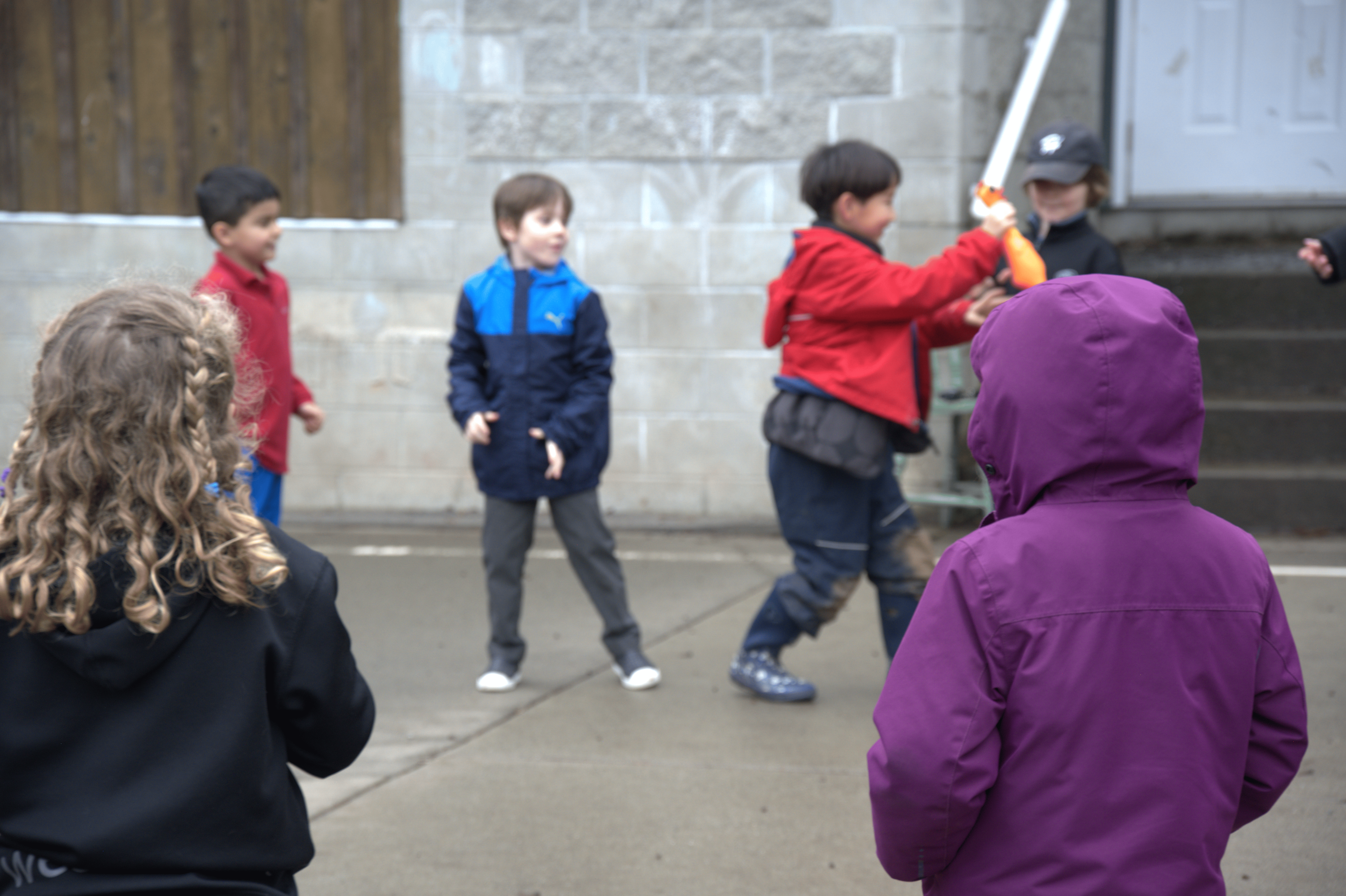
What happens when we stop requiring children to sit still and listen? They move. They explore. They engage. And they learn more effectively than they did while sitting passively.
Our 143-acre campus and educational philosophy reflect this understanding. From our youngest students exploring with Montessori materials through our High School students learning through experiential projects in real-world settings, we structure education around activity rather than passivity, doing rather than sitting, experiencing rather than merely hearing about.
What if sitting still isn’t actually how kids learn best? Experience learning in motion on our 143-acre campus. Schedule a campus tour to see how movement enhances education.