

Keeping Kids’ Minds Active Over Summer Doesn’t Have to Mean More School
Summer Learning Activities Victoria BC
no worksheet required.

Every June, well-meaning parents book their kids into math camps and reading programs to prevent the summer slide. Canadian researchers have a more interesting suggestion — and it involves a lot more time outside and a lot fewer worksheets.
Summer learning loss is real. Canadian research on Ontario children in Grades 1-3 found widely dispersed summer learning patterns, with equal proportions of children experiencing substantial gains and losses. But the solution isn’t simply more structured academics. What children actually need to maintain cognitive engagement and prevent knowledge atrophy looks quite different from summer school.
The summer learning slide: what Canadian research actually shows
Canadian research provides the first large-scale examination of summer learning patterns in this country. Studying 1,376 Ontario children across two summers, researchers found that summer learning averaged zero across the population, but individual variation was substantial. Some children gained literacy skills significantly. Others lost ground. The differences weren’t random.
Strong disparities emerged based on family socioeconomic status. Children from affluent families gained literacy over summer while those from lower-income families lost literacy skills. Researchers attributed 25 percent of the literacy gap between top and bottom socioeconomic quartiles at school year start to the previous summer’s differential learning.
This matters because it reveals that summer learning isn’t primarily about whether children attend academic programs. It’s about whether their summer environments provide cognitively stimulating experiences, rich language exposure, access to books and materials, opportunities for exploration, and adult engagement in learning activities.
International research examining summer learning across multiple studies found that on average, students lose approximately one month of learning over summer months, with greater losses in mathematics than reading. Students in higher grades lose more learning than those in lower grades. But this research also found that losses are relatively easily recovered when school resumes, suggesting the issue is less catastrophic than often portrayed.
The key insight: preventing summer learning loss doesn’t require replicating school during vacation. It requires maintaining cognitive engagement through experiences children find genuinely interesting and meaningful rather than obligatory.
Why structured academic programs aren’t the only answer
Parents facing research about summer learning loss often conclude their children need more formal instruction during summer months. This creates a summer schedule resembling the school year; workbooks, tutoring sessions, academic camps, structured lessons.
Several problems emerge with this approach. First, children need genuine breaks from formal academic pressure to maintain long-term engagement with learning. Research increasingly demonstrates that continuous high-pressure academic environments contribute to burnout, reduced intrinsic motivation, and mental health challenges even among high-performing students.
Second, structured academic programs during summer often focus on skills in isolation rather than meaningful application. A child completing mathematics worksheets in July isn’t developing mathematical reasoning as effectively as a child measuring ingredients for recipes, calculating distances for bike rides, or budgeting for purchases at garage sales, all activities integrating mathematics into purposeful contexts.
Third, the assumption that summer should mirror school year structure misses understanding of how learning actually occurs. Children learn continuously through interaction with their environments, experimentation, questions and discovery, social engagement, and problem-solving in real contexts. Learning doesn’t require desks, worksheets, or formal instruction.
Fourth, over-scheduling summer reduces crucial developmental opportunities. Children need unstructured time to develop self-directed activity initiation, creativity arising from boredom, comfort with not being constantly entertained, capacity to follow interests without adult direction, and social skills developed through child-directed play.
Research from the Canadian Paediatric Society emphasizes that children should be kept as safe as necessary during play, not as safe as possible. Free play, including risky play, is essential for physical, mental, and social development. Summer represents a prime opportunity for this type of unstructured outdoor exploration increasingly absent from children’s lives during school years.
The case for unstructured play as a learning tool
Unstructured play isn’t just recreation or downtime from real learning. It’s a fundamental learning mechanism particularly powerful during childhood.
Through unstructured play, children develop executive function skills including planning, organizing, prioritizing, shifting between activities, and managing time without external direction. They practice social negotiation as they navigate relationships, resolve conflicts, take others’ perspectives, and collaborate toward shared goals.
They build problem-solving capacity by encountering challenges requiring creative solutions without adult intervention. They develop physical competencies through active play testing their bodily capabilities. They explore interests deeply when freed from predetermined curricula and timeframes.
Perhaps most importantly, unstructured play allows children to follow curiosity wherever it leads. A child fascinated by insects might spend hours observing anthills, catching butterflies, reading about insect life cycles, drawing specimens, building habitats. This deep, self-directed inquiry develops research skills, sustained attention, intrinsic motivation, and genuine knowledge more effectively than assigned projects on topics children don’t choose.
Canadian research on physical activity provides concerning context making unstructured play especially important during summer. According to the 2024 ParticipACTION Report Card on Physical Activity for Children and Youth, only 39 percent of Canadian children and youth meet recommendations of 60 minutes daily moderate-to-vigorous physical activity.
Only 27 percent meet sedentary behavior guidelines limiting recreational screen time. Just 4 percent meet combined 24-Hour Movement Guidelines for physical activity, sedentary behavior, and sleep. These statistics represent Canada receiving a D+ grade for overall physical activity among children and youth.
Summer offers opportunity to address this activity crisis through unstructured outdoor play children actually want to engage in rather than structured exercise they tolerate as obligation.
Nature and outdoor time: what the research says about summer outside
Beyond general physical activity benefits, time in nature specifically provides developmental advantages for children.
Research on outdoor physical activity and Canadian adolescents found that those spending 14 or more hours weekly being active outdoors had highest prevalence of positive mental health, life satisfaction, and happiness. While 14 hours isn’t a magic number, aiming for roughly two hours daily outdoor activity provides sensible target given potential benefits and low risks involved.
This aligns with thresholds used in ParticipACTION Report Cards. Having quantifiable goals helps families move from vague intentions about more outdoor time to concrete targets. Canadian research demonstrates clear associations between outdoor physical activity and mental health outcomes, life satisfaction, and overall wellbeing among children and youth.
Nature exposure reduces stress, improves attention and cognitive function, supports physical activity and motor skill development, provides sensory-rich experiences stimulating curiosity, and creates contexts for unstructured play and exploration.
For families in Victoria and Vancouver Island, summer provides ideal opportunity to leverage our natural environment. Our region’s relatively mild climate, extensive parks and trails, ocean access, and outdoor recreation culture make nature-based summer activities highly accessible.
At our school, our 143-acre campus backing onto provincial land provides students with daily outdoor experiences during the school year. This outdoor-focused approach aligns with understanding that children learn through direct experience with their environments rather than just through books and screens. Summer naturally extends this philosophy as families explore local trails, beaches, forests, and parks.
Experiential learning activities that don’t feel like homework
The most effective summer learning activities share characteristics: they’re chosen by children based on genuine interest, they involve active engagement rather than passive reception, they integrate multiple skills and knowledge areas naturally, they produce tangible outcomes children care about, and they connect to real-world contexts children find meaningful.
Examples might include cooking projects where children plan meals, shop for ingredients, follow recipes, adjust quantities, and serve results. This integrates mathematics (measurement, multiplication, division), reading (following instructions), planning (timing multiple dishes), budgeting (comparing prices), chemistry (observing how ingredients transform), and nutrition (understanding food choices).
Building projects — treehouses, go-karts, gardens, anything requiring design, planning, material gathering, construction, and problem-solving — engage spatial reasoning, measurement, physics principles, planning skills, and persistence through challenges. Children learn more about structural integrity building something that collapses and requires redesign than memorizing physics formulas.
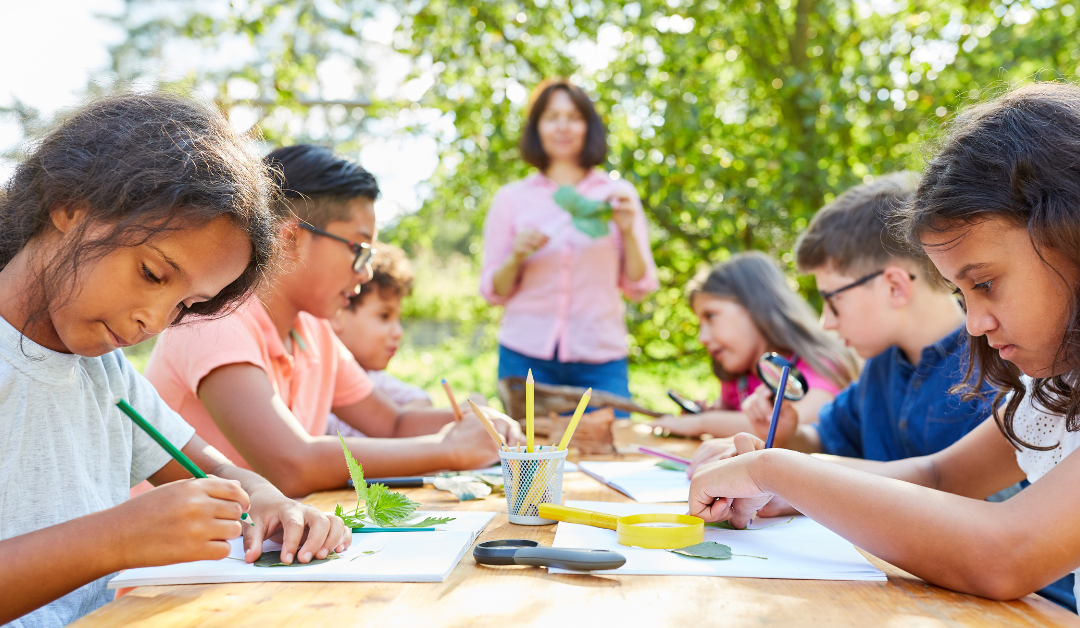
Nature exploration focusing on whatever interests individual children might involve identifying species, tracking animals, observing ecosystems, collecting specimens, sketching observations, or researching questions arising from direct experience. This develops scientific thinking, observation skills, classification abilities, and research capacity.
Creative pursuits like writing stories, producing videos, composing music, creating art, or designing games integrate multiple skills while allowing children to pursue genuine interests at their own skill levels and directions.
Community engagement through volunteering, helping neighbors, organizing events, or participating in local activities develops social skills, builds connections, provides purpose, and exposes children to diverse experiences and perspectives.
The key is that none of these feel like homework to children. They’re activities children engage with because they’re inherently interesting, produce outcomes children value, or connect to goals children have chosen.
How to balance rest, play, and learning over the summer
Parents often struggle finding appropriate balance between structure and freedom during summer. Too much structure eliminates benefits of unstructured time. Too little structure can result in excessive screen time and boredom without productive outlets.
A helpful framework involves maintaining light structure around essential routines while preserving substantial unstructured time. Keep relatively consistent sleep schedules preventing dramatic shifts that make fall transitions difficult. Maintain family meal times providing connection and routine. Preserve expectations around basic responsibilities like personal care and household contributions.
Within this light structural framework, allow substantial unstructured time. Children should experience boredom regularly during summer. Boredom isn’t something to immediately fix through adult intervention. It’s a developmental necessity prompting children to generate their own activities, develop self-directed capacity, and discover what actually interests them when nobody’s telling them what to do.
Provide materials and opportunities supporting diverse activities without dictating how children use them. Art supplies, building materials, books, outdoor equipment, cooking ingredients, tools, and space for projects allow children to follow interests in their own directions and timings.
Limit screen time but don’t eliminate it entirely unless that’s your family’s chosen approach. Canadian Paediatric Society guidelines for school-aged children emphasize healthy management, meaningful screen use, positive modelling, and balanced monitoring rather than rigid time limits. Focus on what screens displace. If children spend reasonable time outdoors, reading, playing actively, engaging socially, and pursuing interests, moderate screen time for entertainment or connection isn’t problematic.
Balance also means accepting that some days will involve more structure and others more freedom. Some weeks might include day camps or classes if children genuinely want to participate. Other weeks might be completely unscheduled. This variability reflects realistic family life rather than requiring perfection.
What to look for in summer programs if you do choose structured time
If families choose some structured programming, whether for childcare needs, to pursue specific interests, or to provide social opportunities, several factors indicate quality.
Programs prioritizing active engagement over passive sitting, providing outdoor time and physical activity, allowing some student choice and input, integrating multiple skill areas naturally, producing tangible outcomes or performances, and maintaining reasonable group sizes allowing individual attention serve children better than programs mimicking school year academics in summer settings.
Look for programs led by enthusiastic staff who genuinely enjoy children rather than just supervising them. Notice whether children seem engaged and energized or bored and compliant. Ask what a typical day looks like — if it’s primarily seated academics and worksheets, reconsider.
Consider whether your child wants to participate. A child excited about science camp will benefit from that experience. A child dragged to math tutoring they resent likely won’t gain much beyond association between summer and academic drudgery.
Balance specialized programs with unstructured free time. A child attending morning nature camp five days weekly still needs afternoons and weekends for self-directed play, rest, and family time.
For families already part of our community, summer extends our school year philosophy into family time. Our emphasis on experiential learning, outdoor education, following student interests, and developing genuine curiosity doesn’t stop in June. The principles guiding our approach during the school year apply equally to summer learning in family contexts.
How a strong school philosophy carries into summer
Schools focused on memorization, test scores, and compliance often create children who view learning as something imposed by adults in classroom contexts. When summer arrives, these children happily abandon anything resembling learning.
Schools emphasizing curiosity, experiential engagement, student choice, and intrinsic motivation develop children who continue learning during summer because they’ve never separated learning from life. They’ve experienced learning as discovering interesting things, following questions, developing capabilities, and engaging with the world — activities that don’t stop just because school’s not in session.
This is why our Montessori approach emphasizing self-directed learning within prepared environments transfers so well to summer contexts. Children accustomed to choosing work based on interest, following inquiry wherever it leads, and experiencing learning as personally meaningful rather than externally imposed naturally continue these patterns during summer.
Our emphasis on outdoor education and direct experience with natural environments means our students enter summer already valuing and seeking outdoor time. They don’t need convincing that going outside is worthwhile — they’ve experienced throughout the school year how much they learn and enjoy outdoor exploration.
Our multi-age community structures mean our students are practiced at initiating activities, entertaining themselves, and engaging across age differences rather than requiring entertainment from adults or age-segregated programming. These skills serve them well during less-structured summer months.
Summer shouldn’t replicate the school year. It should provide what school years often can’t: extended unstructured time for self-directed exploration, substantial outdoor activity and nature exposure, opportunities to pursue interests deeply without curriculum constraints, rest and recovery from academic pressure, and family time without the school schedule’s demands.
Canadian research demonstrates that children don’t need formal academic programs to prevent summer learning loss. They need cognitively rich environments where they engage with ideas, materials, and experiences that interest them. They need time outdoors moving their bodies and exploring natural environments. They need unstructured play developing creativity, problem-solving, social skills, and self-direction.
They need summers that feel like summers, not just school relocated to June through August.
For families seeking approaches to summer that keep children’s minds active without requiring worksheets and academic pressure, focus on experiential learning activities children choose, substantial outdoor time and physical activity, unstructured play allowing creativity and self-direction, reading for pleasure rather than assignments, and family activities integrating learning naturally — cooking, building, exploring, creating, questioning.
Our approach to learning doesn’t stop when school does. It’s a philosophy carrying through everything.