

What Metchosin and the West Shore Offer That Victoria Families Are Only Starting to Notice
Families researching private schools in Victoria often focus on the core.
Here’s what’s worth knowing about Metchosin, the West Shore, and the schools on this side of Greater Victoria.

Victoria families researching schools tend to start their search in the same places: Oak Bay, Saanich, the inner municipalities. It’s where most of the visible school options are, and where most of the school research conversations happen. A growing number of families, however, are looking west — toward the West Shore communities of Langford, Colwood, View Royal, and Metchosin — and finding something worth paying attention to.
Part of this is practical. The West Shore has been the fastest-growing part of Greater Victoria for over a decade. Langford’s population increased by approximately 65% between 2016 and 2024, driven by families seeking more space and more affordable housing than the core can offer. Sooke School District 62, which serves Langford, Colwood, and surrounding West Shore communities, has seen student enrolment grow by 300 to 500 students per year every year since 2014 — roughly the equivalent of one full elementary school annually. A third high school for the area is now in planning.
That growth tells a specific story: the West Shore isn’t a peripheral afterthought to Greater Victoria. It’s where a significant share of the region’s families with children actually live.
But population growth and school choice are different questions, and families moving to or already on the West Shore face a school landscape that differs from the core in ways worth understanding clearly.
The West Shore’s school landscape: what’s there and what’s not
Sooke School District 62 operates the public schools serving Langford, Colwood, View Royal, portions of the Highlands, and Metchosin. The district has built steadily to meet demand, with multiple elementary schools across Langford and Colwood, two middle schools, and two secondary schools — Belmont Secondary in Langford and Royal Bay Secondary in Colwood.
Royal Bay Secondary, opened in 2015, now serves more than 1,600 students, making it the largest school on Vancouver Island. A third high school, planned for north Langford on McCallum Road, is currently in the business planning stage.
These are substantial, well-resourced schools. For families whose needs align with conventional public school structures — large secondary programs, broad extracurricular menus, French immersion — the public West Shore system provides it.
What has been less visible is the independent and alternative school landscape on this side of Greater Victoria. Families who want something different from the scale and structure of large West Shore public schools have historically assumed their options required crossing back toward the Victoria core. That’s not entirely accurate.
About Metchosin
Metchosin sits at the western edge of the West Shore communities, bounded by Colwood and Langford to the north and east, the Strait of Juan de Fuca to the south, and Sooke to the west. It was incorporated as a district municipality in 1984 — specifically, according to its own official documents, to protect its rural character from the encroaching suburban development happening in surrounding communities.
That protection has held. Metchosin maintains a minimum one and two-acre lot size bylaw that has kept suburban sprawl out and rural character intact. The 2021 census recorded a population of 5,067. Statistics Canada’s 2024 estimate puts it at essentially the same number — Metchosin is one of the few communities in Greater Victoria that hasn’t grown dramatically, not because it’s unappealing, but because its character depends on deliberately not growing.
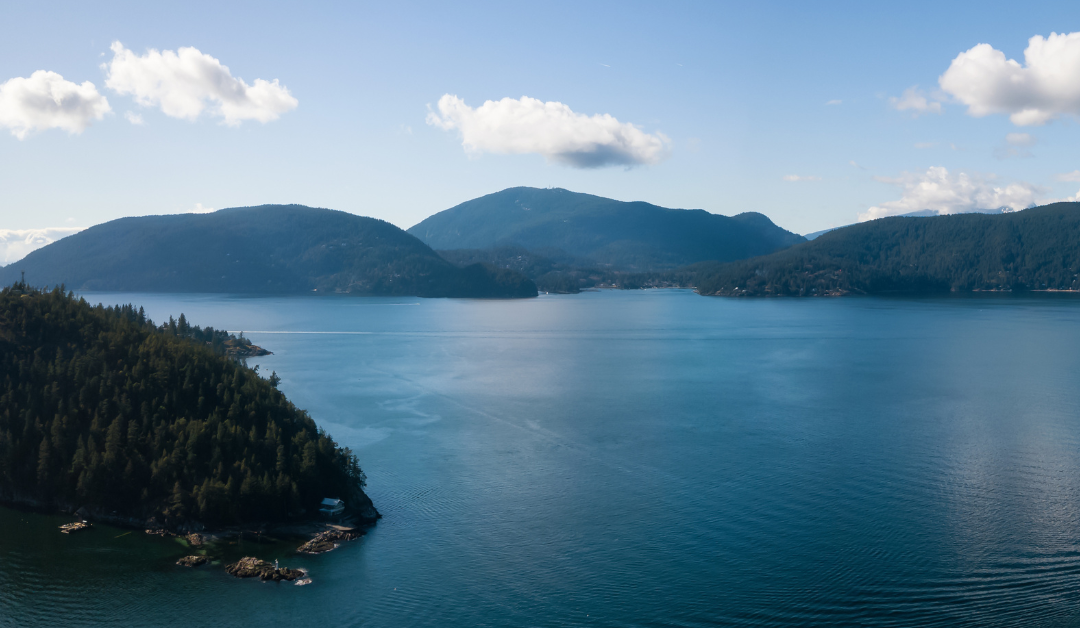
The result is a municipality that sits approximately 20 kilometres from downtown Victoria and feels genuinely different from it. Rocky headlands overlook the Strait of Juan de Fuca and the Olympic Mountains beyond. Witty’s Lagoon Regional Park, Devonian Regional Park, and Albert Head Lagoon Regional Park provide substantial natural areas accessible from Metchosin Road and William Head Road. The median household income in Metchosin, according to the 2021 census, is $104,000 annually — reflecting a community of established, primarily owner-occupied properties rather than the high-turnover rental landscape of the growing urban West Shore.
The Metchosin Farmer’s Market runs from Mother’s Day through to late October. Metchosin Day brings the community together annually. The general character is pastoral, coastal, and community-oriented in ways that feel qualitatively different from the commercial density of Langford or the suburban spread of Colwood.
For families considering where to live in Greater Victoria, this distinction matters. For families already on the West Shore or in Metchosin specifically, it shapes what they’re looking for in schools.
What families who move to the West Shore are often looking for educationally
The West Shore’s growth has been driven heavily by families with children. Statistics Canada’s 2016 data found that Langford and Colwood had significantly higher proportions of residents in the 30-to-34 age bracket and children under 14 than the CRD average. That demographic pattern has continued and deepened since.
These are families who generally moved to the West Shore for specific reasons: more outdoor space, more house for their housing dollar, proximity to nature and recreational land, a slower pace than the Victoria core. These priorities don’t disappear when they start researching schools. Families who chose Langford over Saanich for the trails, the parks, and the larger yards tend to want educational environments that reflect those same values — outdoor learning, space to move, connection to the natural world rather than sealed-off indoor environments.
The tension that emerges is between what the West Shore public system, optimized for rapid growth and large enrolments, can reasonably deliver, and what these families are actually hoping for. A 1,600-student secondary school provides scale and variety. It does not provide the small-community feel, the individualized attention, or the outdoor-focused learning environment that drew many of these families west in the first place.
This is the gap that increasingly leads West Shore families to look at independent schools — not necessarily because they’re dissatisfied with public education as a concept, but because their values around what good schooling looks like don’t map neatly onto what large-scale public schools are structurally designed to provide.
The commute question: being honest about it
Any family considering a school on Metchosin Road is going to think about the commute, and this deserves honest treatment rather than dismissal.
Westmont Montessori School sits at 4075 Metchosin Road, roughly 20 kilometres from downtown Victoria and accessible from the West Shore communities via Metchosin Road and Happy Valley Road. For families already living in Langford, Colwood, or View Royal, the school is a reasonable drive — typically 15 to 25 minutes depending on where in those communities you’re coming from. For families in Saanich or Victoria’s core, the commute is longer, likely 30 to 40 minutes without significant traffic.
That’s a real consideration. It’s not trivial, and families with complex schedules — multiple children, dual-income households, irregular work hours — need to evaluate it honestly against the rest of what they’re seeking in a school.
What’s worth factoring into that calculation is what the commute delivers. Families driving to Metchosin Road arrive at a 143-acre campus backing onto provincial land — an amount of outdoor space that genuinely cannot be replicated in the Victoria core, Saanich, or the urbanizing West Shore. The tradeoff isn’t commute time for convenience. It’s commute time for a fundamentally different kind of educational environment.
For families who have already made the choice to live on the West Shore partly for what that environment offers — the outdoors, the pace, the space — the commute to a Metchosin campus is often a shorter distance from where they already are, and a shorter philosophical distance from what they’ve already chosen.
What the setting itself contributes to learning
Nature-based and outdoor learning isn’t a program feature that can be simulated indoors with the right materials. It requires actual outdoor environments: trails, fields, forests, coastlines, growing things, weather. The research on what outdoor learning produces in children — documented across multiple Canadian studies and reviewed in previous posts on this blog — is consistent on what that requires.
A 143-acre campus adjacent to provincial land in coastal Metchosin provides what no urban or suburban school site can approximate. Students learn across that landscape, not just on a portion of it designated as a playground. The outdoor environment is part of the curriculum rather than a break from it.
This isn’t incidental to Metchosin’s character. The District of Metchosin’s own Official Community Plan describes the natural environment — the rocky shorelines, the forests, the lagoon ecosystems, the streams — as providing substantial and far-reaching benefits to the community. The landscape Westmont’s students move through is the same landscape Metchosin residents have consistently fought to protect from overdevelopment. It’s not a backdrop. It’s the point.
For families who chose the West Shore partly because of what the natural environment means to their children’s lives outside school, this alignment matters. The school’s setting isn’t incidental to their values — it’s an extension of them.
What to actually ask when considering any West Shore school
For families evaluating schools in this part of Greater Victoria, a few questions cut through the noise of rankings and reputation:
Does the school’s physical environment match what you say you want for your child? Victoria families often articulate values around nature, outdoor time, space to move, and connection to the natural world — then evaluate schools based on facilities, test scores, and proximity. The environment children occupy for six or seven hours a day shapes them in ways that don’t appear on any evaluation rubric.
Does the school’s size match what you moved to the West Shore to find? Families who chose Metchosin or rural West Shore properties for space and community and pace often find that large schools reproduce exactly the scale and institutional density they were trying to get away from. Small schools — where children are known individually by every adult on staff, where cross-age community develops naturally, where participation is expected rather than competitive — feel more like what these families were actually looking for.
Does the commute calculation include what you’re commuting to? A school 10 minutes away that doesn’t fit your child’s needs isn’t a better choice than a school 30 minutes away that does. The commute is a real factor, but it’s one factor, and it needs to be weighed against the sum of what a school actually provides rather than treated as the primary variable.
Is the school you’re considering genuinely aligned with your educational values, or does it just serve them in its marketing? Independent schools across Greater Victoria describe themselves in terms of innovation, individuality, and child-centred learning. The questions that reveal what’s actually happening are the specific ones: how are students grouped, how is learning paced, how is progress assessed, what does a typical work period look like, how do teachers describe what they’re looking for in students they work best with.
How does the school handle the full K–12 span, or does it not? West Shore families with young children often think in terms of early learning and elementary choices without thinking ten years ahead. Schools that offer a continuous K–12 Montessori journey on a single campus eliminate repeated transition costs — not just logistically, but developmentally. Children who move through the same community from Early Years through graduation develop depth of relationship and continuity of philosophy that children switching schools every few years simply don’t get.
Why Metchosin specifically keeps coming up in school research
The search terms families use when researching independent schools in Victoria — Montessori school, private schools Victoria, westmont montessori school metchosin road — reflect a community of parents who are specifically looking for what this corner of Greater Victoria offers. The location isn’t incidental to the search. Families researching Montessori schools aren’t surprised to find one in Metchosin. The values that draw families to Montessori education — outdoor learning, individualized pacing, small community, connection to the natural world — are the same values that make Metchosin, rather than the Victoria core, a coherent address for a school like this.
Metchosin Road isn’t an obstacle to navigate to reach the school. For many families, it’s a signal about what kind of school they’re looking for.
Families relocating to Greater Victoria, or already living on the West Shore and reconsidering their school choices, are often surprised to discover that what they want educationally isn’t in the core. It’s twenty kilometres west, at the end of Metchosin Road, on a campus that backs onto provincial land and has been educating children for 67 years.
Whether that school is right for your family depends on more than geography. It depends on whether the educational philosophy, the community, and the physical environment align with what you’re actually looking for — not just what’s closest.
The best way to answer that question is to come and see it. Book a campus tour and we’ll show you what 143 acres in Metchosin looks like on a school day.